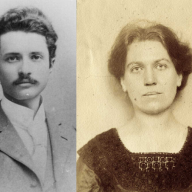
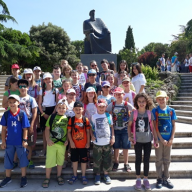
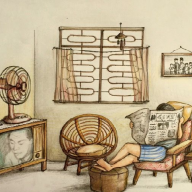
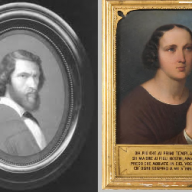
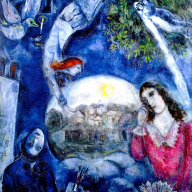
We speak of a double when, within a single spatio-temporal context – that is, within a single possible world created by literary, digital or some other fiction – the identity of a character is duplicated: one becomes two; the character therefore has two incarnations: two bodies corresponding to the same identity and often to the same name.
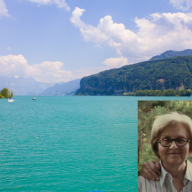
Such an immense expanse and such beauty of nature, as if you were breathing in life itself.
Simply by being there, that air and that life flow through you.
We bring you an interesting account of volunteering at an orphanage in Tanzania, from Grgur Vugdelija, a young man from Metković.
I don’t know exactly how I came up with the idea of going to volunteer, and in Tanzania of all places. The opportunity simply presented itself. I had always wanted to go to Africa. For as long as I can remember, it had always been my wish. And so I went.
And I was alive and beautiful. I filled Rama with joy. But he wanted something that I was not. And when he killed me, he touched nothing of what I truly am.
I have lain here for centuries in the Vran mountains, free with an untouchable freedom, and loved with a love that gives new birth.
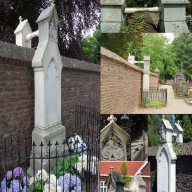
For three centuries now, the Croatian people of Rama and Herzegovina have venerated a lone grave at Kedžara, in the heart of the Vran mountains, as a holy place. There, according to tradition, lies the body of Diva Grabovčeva, who, in the flower of her youth, was killed by a dissolute Turkish nobleman because she resisted his lust. Diva truly becomes a beauty and the collective sister of everyone in Rama the moment she speaks with the soul of a free woman, choosing death rather than life with the wealthy bey Kopčić.
Diva was the daughter of Luka Grabovac and his wife Luca, who for a long time had been unable to have children, until, only in their old age, God took pity on Luca's fervent prayers, and granted them a lovely little daughter, Dijeva (Virgin - Virginia), or, as the people of that region pronounced it in their thoroughgoing ikavian dialect, Diva Grabovčeva.
"Truly, truly, I say to you, unless a grain of wheat falls into the earth and dies, it remains alone; but if it dies, it bears much fruit." - Jn 12:24
All the couples and spouses who, in these difficult days, are separated because of all kinds of circumstances, must surely be wondering how they will get through this hard time. Indeed, many of them are healthcare workers, many are in self-isolation, or find themselves in different cities. We have written this text for them, as a help and a hope for a better tomorrow.
To convey the message we wish to send, we will draw on a story by J. R. R. Tolkien from his trilogy The Lord of the Rings.
"Nothing takes up more space on the surface of human life than love, and nothing is more unknown and mysterious than love. The gap between what lies on the surface and what is the mystery of love - that is the source of drama. "
Karol Wojtyła, as auxiliary bishop of Kraków, writing under the pen name Andrzej Jawień, wrote a drama in three acts, The Jeweller's Shop (Przed sklepem jubilera), about the lives of three couples. In fact, it is "about love as an enduring challenge", for "love determines the future", of each of the three couples, and of each of us. It is full of symbolism and can speak powerfully to each of us, regardless of age or sex.
If you are among the many people who struggle every day, keep in mind that my own struggles brought me to the purpose of my life, which was waiting for me.
And that purpose was far, far beyond anything I could ever have imagined.
I want you to experience all the joy and all the fulfilment that He has intended for you.
I am beginning this story because the person I am going to write about had a great influence on my life, at the time of a crisis I once overcame. At the centre of it all is, in truth, the great love of Christ, which He has for every person in His own way.
Nick Vujicic was born in 1982 in Australia, the first child in his family; yet he came into the world without arms or legs, with no medical explanation whatsoever. At the birth, his father and mother went through a great crisis, to the point that his mother did not want to hold or breastfeed him for the first four months of his life. It took them a long time to believe that God had not made a mistake. After Nick, they raised two more children, both born completely healthy.
"Man has been given freedom and an ideal. Freedom, to feel himself master of what is his, freely to seek truth and new paths. An ideal, to climb towards it, to have a goal towards which he moves."
Ivo Mašina was born in Preko in 1927 to his parents Ivo and Marica. He came from a large family of nine children. He lived, as Mladen Dorkin puts it, "for a world in freedom, for a world in beauty. In his heart there was no room for selfishness, darkness, hatred or revenge. He lived for the ideal of Love and Freedom. In his vision, that ideal was Jesus Christ, perfect God and man. That is why he strove to offer himself as a perfect sacrifice, one he would offer with a pure heart for the freedom of the Homeland, for the right to dreams and to a faith that can and must be fulfilled, as a victory of good over evil, of light over darkness. Ivo Mašina’s dream is of a whole and happy man, free in his thoughts, longings and desires, divinely upright in dignity, within a nation equally free and happy, sovereign and proud in its dignity".
Inland from the town of Morondava in Madagascar lies the famous "Avenue of the Baobabs". A little further on stand some very particular baobabs - "les Baobabs amoureux" (the baobabs in love) - which seem to grow from a single root. In fact, it is one baobab tree with two trunks wound spirally around each other in an endless embrace.
The trunk of the baobab is soft, and it takes many years for the tree to grow. The trees can reach up to 25 metres in height and live for thousands of years. Only after 20 years does the tree flower and bear fruit for the first time. Because of its slow growth and softness, it is compared to Malagasy women. In the southern part of Madagascar, tamarind trees are often deliberately planted beside baobabs to form a pair, since tamarind trees, with their fast growth and hard bark, represent manliness, speed and efficiency. Even today, rituals are held on the western coast of Madagascar in which newly married women stand before a baobab to pray for fertility and a successful marriage - a marriage which, like the growth of the baobab, which when fully grown conceals within it fruits of many kinds, requires patience, perseverance and gentleness.
We bring you a text by Fr Šimun Doljanin on the harm that haste does to the growth of love, together with two stories about the baobab that confirm this.
We bring the story of Telemachus and Odysseus, of a father and a son, of two people who learned from their mistakes.We also bring the testimony of Massimo Recalcati, the Italian psychiatrist who has written more than most about Telemachus and Odysseus, about a son's need for his father and a father's need for his son. He shares with us his own experience of his father, of his father's absence, and of what he inherited from him.
All of us have been Telemachus at least once, have gazed at least once at the horizon of the sea, waiting for someone or something to return to us from there, to come to us and restore our strength for living. Today's Telemachus is the young person in a state of alienation: without a clear future, wrecked from within, without perspective, without authentic experience, without desire, enslaved to pleasure, unemployed, insecure. Our children do not inherit a Kingdom, but a dead body, an exhausted land, a ruined economy, unlimited debt, a lack of work, and no horizon for life. Our children are exhausted.
"Life is a marathon. It doesn't matter when you cross the finish line, but the way you run it."
The old Latin saying Vita hominis militia superterram est, meaning Human life on earth is a battle, most vividly reflects the life of the hero of this story. His way of living could be summed up, in short, as a fierce struggle, a ceaseless race and a longing for self-fulfilment. Such was the life lived by the athlete Jesse Owens, an African-American who won four gold medals and was the star of the 1936 Berlin Olympics.
"In my youth's days I longed ardently to pierce the hearts of others with my own heart, to shine before the nations, to rise, I myself knew not where…." Byron, Manfred
"I do not forget her (Greta); Schiller's line always comes to my mind: "Oh, dass sie ewig grünen bliebe, die schöne Zeit der ersten Liebe." (Oh, that it might remain forever green, the beautiful time of first love).The first love is the deepest, and that is why the memory of it is sacred to me.All this is fleeting. I doubt I ever loved anyone as deeply as I loved Greta; and yet it passed – I remember it, it ennobled me, but one can live without it too." Ivan Mertz
Ivan Merzwas born in 1896 in Banja Luka, the only son of his parents, raised in a liberal, bourgeois spirit. He, too, grew up in Banja Luka, in a family and social environment in which greater care was given to civic and worldly values, while Christian ones were more a matter of formality and tradition. He was a soldier in the First World War. He studied in Vienna, Paris and Zagreb.He earned a doctorate. He was a professor of French language and literature. He had a broad culture. He was one of the leaders of the Catholic movement, worked extensively with young people, and wrote many valuable texts. He died in 1928 at the age of 32, with a reputation for holiness. His grave is in Zagreb, in the Basilica of the Sacred Heart of Jesus on Palmotićeva Street. Pope John Paul II declared him blessed.
At the age of sixteen he fell in love with his peer, Greta Teschner. He experienced this falling in love very intensely. But soon Greta, during a brief stay with her parents in Travnik, became involved with a young Muslim man who exploited and then abandoned her. She experienced this very traumatically and tragically, and in that disappointment took her own life: „When I learned of her death, a fracture occurred in my soul, not all at once but over time… My youth, it seems to me, has lain down in the grave with her; everyone else can laugh from the bottom of their heart, I cannot.I look at girls, I like them, but if I think of her, everything else vanishes. The only comfort I find is in art, which I love intensely, and in nature. Her soul has shaken off transience and departed. Where to? Into eternity. But God, horror seizes me when I think that she took her own life.“
What a story of love! Love as a virtue struggles against folly and corruption, betrayal and hypocrisy, against cowardice and vicious brutality, against rebellion and disease — and wins.
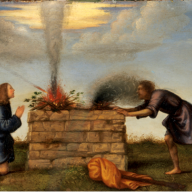
The LORD said to Cain: "Why are you angry, and why has your countenance fallen? If you do well, will you not be accepted? And if you do not do well, sin is couching at the door; its desire is for you, but you must master it."
Each of us carries both Cain and Abel within, and every day we struggle against straying onto Cain's path. History is full of people who took that path, leaving nothing behind but blood and death. What does it mean to offer a right sacrifice?It means falling to your knees and asking the Lord to kindle the sacrificial fire. It means giving the Lord the best of what we have.