It is sixty years since Pope John XXIII's encyclical "Pacem in Terris - Peace on Earth". The encyclical remains highly topical, for in a world waging numerous wars, such as the one in Ukraine, marked by terrorism, the emergence of viruses, problems of food and water, an arms race and the renewed threat of nuclear war, together with various other negative social phenomena, it is peace itself, at every level, that is endangered – peace on earth in general. It had been expected that after the fall of the Berlin Wall in 1989, the symbol of the division between East and West, a new period of peace would follow, marked by general security and free of the danger of nuclear war. Yet these very days show something quite the opposite. The threat is growing to the point of unpredictability, since nuclear weapons, and the real danger of their use, have once again become part of our everyday life. Carl Gustav Jung outlined this well long ago: "Only let sufficient corresponding material (weapons) pile up, and the diabolical element in man will infallibly be strengthened, and set out on the march with him."
"It is almost impossible to think that in the atomic age war could still be used as an instrument of justice," wrote John XXIII, using the Latin phrase "alienum est a ratione" – to think of war as a solution to conflict is "unreasonable". He advocates dialogue between people who differ ideologically or in other ways, and cooperation in mutually beneficial undertakings "among all men of good will".
Learn to feel compassion and to find, if not justification, then an explanation for the actions of those who have hurt you.
And always put yourself in the place of those people.
Hatred only eats away at you.
Do not seek justice from God, but seek mercy.
Anthony Bloom of Sourozh was born in Lausanne in 1914. He spent his early childhood in Russia and Persia, where his father was a member of the Russian imperial diplomatic corps. During the Russian Revolution his family had to leave Persia and, in 1923, settled in Paris, where he graduated in physics, chemistry and biology from the University of Paris, and later took a doctorate in medicine. In 1939, before going to the front as a surgeon in the French army, he secretly took monastic vows. In 1943 he received the tonsure and was given the name Anthony. During the German occupation of France he worked as a doctor and took part in the French Resistance.
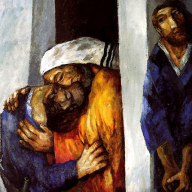
When we speak of reconciliation, we mean a new relationship, an entirely new relationship between the parties in conflict, or between a person who has been deeply wronged and the one who wronged them. On the part of the wrongdoer this means acknowledging responsibility; on the part of the wronged it calls for breadth of heart, a readiness to accept the humble confession of another's sin, and an open conversation that does not seek to restore what went before, but to create a new relationship. The Lord says: "Behold, I make all things new!" (Rev 21:5).
We are called to build peace by choosing a vocation great enough to embrace the whole of humanity, to build the Kingdom of God, which includes peacemaking: peace between one person and another, peace within small groups, peace within ever larger wholes, but first of all peace with what God has created and in which we live. Then we shall have a common goal, and in the fellowship of that goal we shall make the world as God wanted it to be, and so we shall be reconciled with one another too.