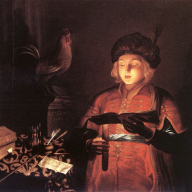
How long does silence (a lull) last in a conversation before it starts to make us uncomfortable?
The Dutch psychologist Namkje Koudenburg says that it takes only four seconds for the discomfort to set in. The time of silence has arrived, or at least a time in which we have more opportunity to be in silence, to be with ourselves. This has, in part, been forced upon us by the coronavirus, which has reduced our social contacts and compelled us to stay at home for long stretches of time. As recently as last month, something seemingly quite impossible, and therefore shocking – "the prospect of an unreal silence", as Giuseppe Marino puts it.
As the psychiatrist Karl Menninger observed, sin can simply be a failure to act, to know, or to see what must be done – in short, a failure to care; that, quite literally, is what the word acedia has always meant, a problem recognised for centuries, and one that still afflicts us today.
Karl Menninger
Bertrand Russell once observed that a generation unable to bear boredom becomes a generation of small people, cut off from nature's slower rhythms, in whom every living impulse gradually fades, like flowers cut and placed in a vase.
Bertrand Russell
There is a spiritual state that is both a reaction to our wounds and a cause and consequence of our sins and weaknesses. We call it acedia. It can creep, like a spiritual worm, into our homes and family relationships, into our churches and sacristies. There are three kinds of acedia.
He came to his own home, and his own people received him not.
To those who did receive him, he gave power to become children of God!
Christmas is sweet and wonderful, but it also powerfully calls us to conversion. A change of mind. Self-examination. A decision. Today people often speak of a stolen Christmas. Who stole Christmas? And the theft of Christmas is indeed always really happening. However, it is not stolen by pomp and empty-headed managers, but by the closing of our eyes and ears to the drama of Christmas. The dramatic character of Christmas reaches its peak in John's sentence (which we read on Christmas Day itself): He came to his own home, and his own people received him not. To those who did receive him, he gave power to become children of God!
The "O Antiphons", or Great Antiphons, is the name given to the seven antiphons that are sung or recited with the Gospel canticle, the Magnificat, at Vespers during Advent, in the eight days before Christmas, from 17 to 23 December, in the time of immediate preparation for Christmas. They express the dynamic of wonder, on the part of whoever sings them, before the mystery of the Incarnation.
The antiphon for 20 December, "O wondrous Key of David", depicts Christ's works, His power to open and to close, to free captives from the darkness. The antiphon calls upon the coming of the Messiah as the key that opens, as the Servant of the Lord in His absolute power - to open or to close - and in His role as the Liberator of those held captive by darkness.
The fear of pain weighs on us more than the pain itself. We know, however, that fear also removes pain. We rid ourselves of one pain with another, greater pain. Epicurus dispelled fear – above all that fundamental, greatest fear, the fear of all fears, the fear of death – through a mental operation by which we and our death never meet. While we exist, Epicurus said, there is no death, and when death comes, we no longer exist.
Nothing steals our attention so powerfully as pain. Pain deepens, sharpens, changes our relationship with the world. When we fall ill, our world is no longer the same. The space in which we live narrows and changes its meaning. Pain takes from us the space of life’s movement. The people with whom we shared work and life are no longer there. There is no longer the practised rhythm of work, rest, socialising, sport, sleep. The experience of pain is an entirely new experience of the world, a different view of the world. With the appearance of pain, the world appears in a different way. Pain changes and intensifies our experience of the world and of reality. The fundamental common feature of very different experiences of suffering is the compulsion to take on something unpleasant, painful, destructive.
We present an article by Fr Ante Vučković published in the theological journal Crkva u svijetu and parts of an interview in Glas koncila on pain, its meaning and significance for our lives.
The phrase brave new world, from Shakespeare's play The Tempest, was taken by Huxley as the title of his futuristic novel, in which he portrayed a "perfect" humanity that has no need of mercy or love. Perfect technology and successful genetics are enough.
Everything is sterile, utilitarian and hurried; life is pleasant, there is no illness, emotion, pain, suffering or coercion. Entertainment and a consumerist mentality flourish, all activities are collective, and sexual promiscuity is desirable. Sexuality is separated from emotion and intimacy, in keeping with the slogan everyone belongs to everyone else. Everyone is constantly together, yet individuals are unfeeling and atomised, so that true community does not exist.
"In my youth I came to know the "God of hope". Now, in old age, I know the "God of patience". Hope brings us excitement, while patience is arduous. But if in hope we approach something new, it is only in patience that we hold on to it. In steadfast patience, hope becomes lasting." Jürgen Moltmann
The Greeks use the terms hypomonè (waiting) and paskein (patience), which refer to a person's capacity to pause because something important is happening, meanwhile reflecting and perceiving how it will come about before it actually does. This means a vital kind of pausing, because something is happening, and it matters to wait for it to happen before acting. Finally, here is another expression rich in meaning – makrothymìa (length of spirit), which allows us to look toward the future. The patient person is the one whose gaze is turned forward, looking toward the future. Ciceroin his workPartitionesoratoriaewrote to his son: "What suits the troubles that lie ahead is called fortitude; what endures and sees things through to the end, that is called patience."
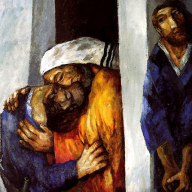
O gentleness of the Father, pour yourself into the son's soul…
There is always great meaning hidden in small differences. Sometimes that small difference is so imperceptible that only the Holy Spirit can reveal its meaning to us. Let us pause on the difference between gentleness and permissiveness. Being permissive with oneself leads, little by little, to catastrophe. On the other hand, being merciful and gentle with oneself leads to spiritual maturity. Whoever is cruel to himself is inevitably crueller still to others. Interestingly, whoever is permissive with himself is also harsh with others. With gentleness and mercy it is entirely the opposite. Whoever is gentle with himself is gentler still with others.