It is a question for all of us how to position ourselves in relation to the coronavirus, the problems of isolation and the other difficulties that arise from such a situation. And, more importantly still, how we will talk to those close to us, especially children, to colleagues, and finally in public, about this problem, which creates numerous restrictions and causes numerous problems and fears concerning the nearer and more distant future.
The first and most important thing is never to be afraid. Fear spoils our mood, which predisposes us to fall ill more easily. For the body to overcome infection, the spirit must be strong.
Albert Camus wrote the famous novel "The Plague". What is less well known is that he also wrote two shorter works, Lessons and Speeches, on the outbreak of plague, intended for medical staff and all those confronted with the problem of plague.
Fervently I seek you; my soul thirsts for you; my flesh faints for you, as in a dry and weary land where no water is. Your steadfast love is better than life.
Sometimes we think like this: grab some money, sex and success, pour them into the vessel of our heart, and in the end make a cocktail called happiness. It seems simple, and entirely possible. Why not? It's logical, after all. Everything is within reach. Everyone strives for it. There are so many ready-made recipes. Surely it must turn out good and sweet!
They say that Mozart would often put a question to those who pressed him to play something for them: Lieben Sie mich? (Do you love me?). If he received an affirmative answer, he would sit down at the piano and display his virtuosity. He could not bear that someone should love his music and his playing without loving him. Love inspired him. It instilled in him security and wholeness, a higher mathematics.
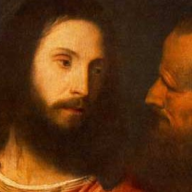
Interestingly, Christ too asked Peter: Do you love me? He wanted Peter to set aside everything that was not His own Person, and to love Him personally. Only this has full meaning. Everything else creates confusion. A person seeks a person!
"Let not yours be the outward adorning with braiding of hair, decoration of gold, or wearing of fine clothing. But let it be: the hidden person of the heart, with the imperishable jewel of a gentle and quiet spirit. This is precious in God's sight." 1 Pet 3, 3-4
"Appropriate clothing makes us human."
William C. Breda
"A clear-headed and sensible man moves through his world in decent and suitable clothing."
G.K. Chesterton
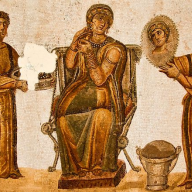
Outward appearance and clothing have always been essential markers of personality. Besides its functionality, clothing has, in a certain way, expressed a person's nature. The questions surrounding how we dress reach back to ancient times, where one must look for the origins of certain rules concerning dress that have remained established down to the present day. Clothing is a symbol rich in nuance: it represents dignity - royal, priestly or prophetic; the garment a believer wears is woven from evangelical attitudes: mercy, goodness, humility.
Sound, in its many forms, is part of our life. It is not only about music. It is a broader notion, denoting the many invisible waves that stream through the air and reach our ear. What enters us through the ear changes us, transforms us, penetrates deep within us.
One of the words we often hear through the media, and which is slowly working its way into our ears and our hearts, is: threat. An interesting word. We hear it from military circles, when talk turns to national security and the strengthening of defence forces. In summer we hear about the threat of wildfires; we have heard about the threat of earthquakes. Many are under threat of losing their jobs, or already find themselves amid the threat of unemployment. We feel the threat of one small virus, which at one point brought half of humanity to a standstill and affected our lives… Many endure the threats of violence, injustice, loneliness …
Threat is unavoidable, but comfort is stronger.Good is always stronger than evil.Even though at first glance it may not seem so.Where do we find "comfort"?
One of the words we often hear through the media, and which is slowly working its way into our ears and our hearts, is: threat. An interesting word. We hear it from military circles, when talk turns to national security and the strengthening of defence forces. In summer we hear about the threat of wildfires; we have heard about the threat of earthquakes. Many are under threat of losing their jobs, or already find themselves amid the threat of unemployment. We feel the threat of one small virus, which at one point brought half of humanity to a standstill and affected our lives… Many endure the threats of violence, injustice, loneliness …
Threat is unavoidable, but comfort is stronger.Good is always stronger than evil.Even though at first glance it may not seem so.Where do we find "comfort"?
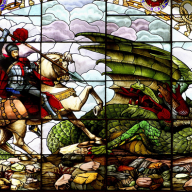
"Fairy tales are more than true — not because they tell us that dragons exist, but because they tell us that dragons can be beaten." ~ G. K. Chesterton.
To begin this piece, I want to tell you a children's story that seems fitting for what I want to say.
The story is called: "There's No Such Thing as a Dragon," by Jack Kent.
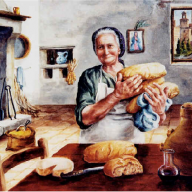
…a certain special ingredient comes into my bread…
Wherever life may take you, you always fondly recall the scents, images and people of your childhood. Those memories stay with you your whole life long. They are part of you, however your life looks today and wherever you find yourself, they remain a part of you. Even today you can feel them just as strongly. This story bears that out too.
These days, often despite a situation that can change very quickly, we hear or read in the media an interesting phrase: the new normal. This slogan is meant to express, and to call us to, a new way of living in the special circumstances we have been experiencing these past months.
"Watch every day and every hour, and be ready to do perfectly what is pleasing to God,
knowing that the Lord comes at the hour we do not expect"
Basil of Caesarea.
We might say that our existence unfolds in expectation – from one event to the next. Waiting to be born, I wait to grow up and mature, I wait to die, and finally I wait for the "fulfilment" of life, which stands above all expectations. The season of Christmas, which is preceded, as its preparation, by the season of Advent, already offers us a pledge of that fullness of divine, eternal and blessed life which has been communicated to us in the Spirit of the Risen One. Advent reminds us that we are all truly in a state of expectation. For this reason, we cannot afford to live as in the days of Noah, in the superficiality that is "the supreme vice of our age", as Raimon Panikkar puts it.
It remains of exceptional importance to us that we have finally learned to view the great events of human history from below, from the perspective of those who suffer. The point is that, within this view from below, we should not place ourselves on the side of the eternally dissatisfied, but rather respond to the needs of life in all its dimensions.
Dietrich Bonhoeffer
Humility is recommended to you, that you may not become an unfeeling person: He, God, became man; you, O man, acknowledge that you are man: all your humility consists in recognising that you are man. Now, since God teaches you humility, he says: "I have not come to do my own will, but the will of him who sent me." The proud do their own will. The humble, however, do the will of God.
St Augustine
In these days we have turned our gaze towards heaven, towards the communion of all the saints, and prayed for the souls of the departed. Let us hold our gaze upward for one more moment, that we might pause before the figure of an extraordinary saint of the Church's renewal after the Council of Trent - St Charles Borromeo.
Human nature, with its needs and desires, has three weak points, relating to three tendencies which we might call cracks or open wounds. They have existed in man from the beginning.
The first crack weakens man's healthy and natural desire for life, for being, for creating, for begetting. It is called greed. It is the perverted tendency to gather for oneself, to possess for oneself, to beget for oneself.
The second crack relates to man's healthy and natural need to be recognised and loved. The perverted tendency that lives within us consists in this: instead of rising above the need for recognition and love, instead of turning it into a true and personal relationship with another person, we use it only for our own benefit.
The third crack, which makes us fragile, vulnerable and susceptible to temptation, relates to the healthy human need to create, to organise, to have mastery over time and things. The perverted tendency consists in this: we want to rule over everything for our own benefit, by means of power, wealth or knowledge.
"Teach us to number our days, that we may get a heart of wisdom" Ps 90:12
The topic of all topics at this time is the coronavirus. Indeed, it is mentioned in this text too. But is that entirely so? Is the virus really the top topic in the media, in conversation …? One topic rivals, in the frequency with which it is mentioned, the viral topic of the virus. That topic is time. Time!
Željko Mardešić was born in Milna on Brač, but spent his childhood in the beautiful town of Komiža on Vis, where he is also buried. He was one of the most respected sociologists of religion, although he trained in law and worked as a lawyer. He was well versed in theology and greatly enthused by the Second Vatican Council. He wrote about matters of great interest and spoke with all kinds of people. He followed everything happening in Croatia and the world, on the social level and especially the ecclesial one. He wrote a few pages about himself in the Introduction to his book "The Faces and Masks of the Sacred". He tells us of three humiliations he experienced, which stirred rebellion within him, and how he managed to overcome them. They were the humiliation of reason, of personal moral inconsistency, and the humiliation of goodness. In the end he also experienced the humiliation of poverty, caused partly by the hardship of the Homeland War and partly by his own choice of a self-effacing life.