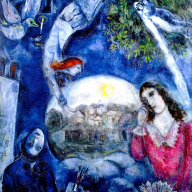
Look at me, look at me, I've been here for four months already… Look at me! Right in the eyes – inside! Let me see myself in your eyes! These eyes were not looking for themselves; they were no longer mine, nor did they look at themselves! They were …in yours, always – so that they might be born in them, from your eyes alone my image, just as you see me! A view of all things, of the whole world, just as you see it. Here I am now – just as you want me.
“As You Desire Me”, Luigi Pirandello
As soon as a child is born, the visual-motor system (looking and seeing) immediately becomes the most important system for its growth, that is, the way the child communicates from the very beginning. What it will most likely look at and see is its mother's face, especially her eyes. The mother's face and eyes become the centre of its observation.
Children know how to be joyful regardless of circumstances
Children allow beauty to delight them
Children are teachable
Children are sincere seekers of truth
Today, 20 November, marksWorld Children's Daywith the aim of raising awareness of the importance of caring for the wellbeing and protection of children around the world. How can marking this day help adults live their everyday lives more fully? What life lessons can we learn from children?
In the situation in which we found ourselves over the past months, it was certainly not easy to give up the everyday life filled with social interaction, both for us and for the youngest among us, who were forced to leave behind their school desks, friendships, hobbies and various other activities.
These specific circumstances have perhaps helped us understand better the value of the sibling bond, which provides an enormous number of factors that foster healthy psycho-physical and social development.
We bring an article from the book dedicated to Prof. Ante Vukasović, For Better Upbringing and a More Successful Married and Family Life, on the beauty, importance and challenge of childbearing and posterity for Kučići, for Croatia and for the whole world.
"The world belongs to the young" - so runs the old folk saying. The young carry on the work of their forebears - their parents, grandparents and great-grandparents. This is a condition of human survival, a lawful process that makes possible the continuity of life, of humanity's preservation and development. Descendants mean the continuation of the life of the family, of the nation, of humankind. They build family trees, search out their roots, carry forward what has already begun, extend what is unfinished, bring about what has not yet been achieved. They join together decades, centuries and millennia. They make possible the development of human culture and civilisation. They will carry forward our work too. They will make possible the further development of the human race and its culture in the future.
Claudia Messing, a psychologist, sociologist and president of the Argentine Society for Family Therapy, in her latest book "How Children Think and Feel Today", says that in our time "a structural change is taking place at the social level in the parent/adult–child relationship, called the 'symmetry of the child with the adult'. Children imitate their parents and adults to such an extent that they repeat their sentences, their way of thinking, their attitudes, knowledge, anxieties and fears, and also imitate their unresolved life stories. In this way they place themselves on the same level - as if they were adults".
"The demands of growing up are becoming increasingly difficult. Children and young people become blocked, demoralised, and quickly abandon their interests. That is why the question of vocation and profession is so hard today: they must, and want to, choose an occupation that guarantees them satisfaction and success, and they must not make a mistake. We have to teach them, and show them by example, how to gradually discover their own interests and talents. Otherwise, this is something that can be paralysing, where the pleasure of discovery is suppressed and the security they are looking for is very hard to find."