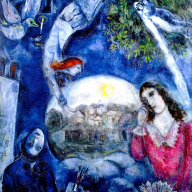
Look Me in the Eyes
Look at me, look at me, I've been here for four months already…
Look at me! Right in the eyes – inside!
Let me see myself in your eyes!
These eyes were not looking for themselves;
they were no longer mine, nor did they look at themselves!
They were …in yours, always – so that they might be born in them,
from your eyes alone my image, just as you see me!
A view of all things, of the whole world, just as you see it.
Here I am now – just as you want me.
“As You Desire Me”, Luigi Pirandello
As soon as a child is born, the visual-motor system (looking and seeing) immediately becomes the most important system for its growth, that is, the way the child communicates from the very beginning. What it will most likely look at and see is its mother's face, especially her eyes. The mother's face and eyes become the centre of its observation.
A newborn cannot see straight away; instead, it reflexively follows and fixes on an object. Without any prior experience, it can track a moving object with its eyes and head, and can hold its gaze on it. This is easily observed in most newborns. Many of them, within a few minutes of birth, will alertly track with their eyes an object passing through their field of vision.
A newborn does not come into life with ready-made ideas about objects and things in the world around it. All of it is new to it. There are no pre-existing ideas or established systems of things that could conflict with its visual perceptions. Its experiences gradually become broader, more complex and more comprehensive over time. As long as it is not overwhelmed by negative stimuli, it continues with its important task of building up a perception of the world around it, an image of people and objects.
This does not mean that a newborn child is a blank slate. It arrives with a range of internally determined perceptual tendencies, motor patterns, thinking dispositions, capacity for emotional expressiveness and, to a certain extent, recognition. It needs timely and balanced stimulation. One of the first elements of that balance is that an infant can focus well on objects at a distance of roughly eight centimetres. It cannot see clearly objects that are much further away or much closer. They go out of focus and probably become blurred.
However, there is a very important difference between looking and seeing, just as there is between hearing and what is actually heard. Is the newborn immediately overwhelmed by a chaotic and overpowering world? A world in which there is light and dark, angles, lines and shapes, but no meaningful objects, no way of knowing where one thing ends and another begins, nor any way of distinguishing people from objects. For the first few weeks after birth, most of its waking time is spent feeding and around feeding, and somewhat less on nappy changes or bathing.
What will the newborn see? It turns out that when a newborn is in the usual position for breast or bottle feeding, its eyes are almost exactly eight centimetres from its mother's eyes (if she is turned towards it). During feeding, mothers spend about 70% of the time looking at their child, while the child may observe the mother less. This gradually decreases. An important task for both is mutual attunement. What it will most likely look at and see is its mother's face, especially her eyes. The mother's face and eyes become the centre of its observation.
Several earlier theories assumed that the first and most important object for the child was the breast. But it is too close to be in focus. So everything points to the mother's face as the initial centre, from which the early building of its visible world begins, and the starting point for the formation of its early ability to establish relationships and build its own sense of self.
As Winnicott puts it, the child thinks roughly as follows: "When I look I am seen, so I exist." The mother's face serves as a mirror through which it recognises itself. Everything that comes from the mother becomes all-important for the child: physical touch, voice, and mutual gazing with the mother. All of this tells it that it exists and that it matters.
Some research also confirms the importance of gaze in the early stages of life and of connection with others. Ahrens and Spitz observed that, at three months of age, infants show more interest in and smile more at faces positioned directly opposite them, compared with faces seen in profile or other objects appearing before them. And in children's earliest drawings, the focus was on two large dots representing eyes, positioned precisely within a larger circle representing the face.
This means that the newborn is oriented, from the very beginning, towards the human face or some of its features. An innate predisposition towards a particular visual configuration is no small thing. It implies that some scheme or "image" of the human face is encoded in our genes, which is reflected in our brain and ultimately expressed in our behaviour, without any prior specific learning experience.
In fact, nothing in the world can capture a child's attention like a human face. The stimuli that reach the child through the faces of those close to it are crucial for its later development; the changes that occur on their faces are especially fascinating for a newborn. The human face does indeed seem to be the thing that occupies it most.
This is true above all of the mother's face. Somewhere around the sixth week, the child's visual-motor system reaches a developmental stage that lifts this interaction with the mother to a new level. What happens is very subtle. The infant simply becomes able to visually fixate on its mother's gaze. As for the mother, for the first time she experiences, quite certainly, that the infant is really looking at her. Indeed, that it is looking her right in the eyes. The mother may experience she and the child as finally "connected". Most often mothers cannot pinpoint this change.
This is the time when the father begins to become more actively involved in the relationship with the child. Another pair of eyes becomes important, opening the door to the world for the child and helping in its gradual separation from the mother. In this way the child further strengthens its own sense of self and can start to see things differently than the mother does. This opens up for the child a path towards its own future. The father's role is very important for the child.
Eric Clapton beautifully captured the importance of that gaze in his song "My Father's Eyes", in which he sings about recognising his own father's eyes in the eyes of his own son. This line in fact tells us that the father, too, finds affirmation in his son's eyes.
By the end of the third month, the child reaches another qualitative leap in development. The visual-motor system has become essentially mature. Above all, its visual world is no longer limited to the short distance of 8 cm. The newborn's focal distance now reaches almost the same range as in adults. The infant can follow its mother as she leaves, approaches and moves around the room. It quickly moves its eyes to follow an object or hold it fixed, and is equally able to shift its gaze quickly to bring objects into focus.
This developmental feature is remarkable when compared with the immaturity of most of its other systems of communication and capacity for contact, such as speech, gestures, movement or handling objects. Such maturity in the motor control of gaze direction gives it greater control over what it will see. In this way the child already begins to choose what it wants and does not want to look at. The child becomes a true partner.
Mutual gazing between child and mother, and later father, is important for the later ability to "read" other people's faces, but also for awareness of self and other (who am I to myself, who is the other to me, and who am I to the other). The child first finds its physical and emotional self in its mother's eyes, and later in its father's.
This is beautifully reflected in a short piece of Maori poetry:
I am so happy because of you.
I look at the beauty of your face
and see a great gift for us both.
In you there is so clear an imprint
of our wonderful ancestors,
who, with every breath, prayed the future into being.
(for Monika)
- Mladen Klanac
- Hits: 54