Love Wounds and Sanctifies
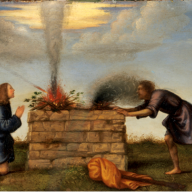
"Truly, truly, I say to you, unless a grain of wheat falls into the earth and dies, it remains alone; but if it dies, it bears much fruit." - Jn 12:24
All the couples and spouses who, in these difficult days, are separated because of all kinds of circumstances, must surely be wondering how they will get through this hard time. Indeed, many of them are healthcare workers, many are in self-isolation, or find themselves in different cities. We have written this text for them, as a help and a hope for a better tomorrow.
To convey the message we wish to send, we will draw on a story by J. R. R. Tolkien from his trilogy The Lord of the Rings.
The story tells of the mortal Aragorn and the immortal elf-maiden Arwen, daughter of Elrond. After his father was killed in battle against the Orcs, Aragorn was sent, together with his mother, to live in Rivendell. When he was 20 years old, he was walking through the woods singing the Lay of Lúthien (a maiden of great beauty). Singing thus in the woods, he caught sight of Arwen and thought he saw Lúthien - it seemed to him he was dreaming. From that moment he loved only her. Arwen's beauty was famed far and wide, as was the love and protection of her father Elrond. Aragorn's mother warned him that his love for her was wrong, and Elrond, Arwen's father, agreed. Marriages between elves and mortals were not looked on favourably, since elves live forever while mortals have only a single human lifespan. Because of all this Aragorn goes off to wander. When, on his travels, he passes through Lothlórien, he meets Arwen again. She then, finally and forever, chooses him. They became betrothed, but Elrond still does not approve of the marriage. This time Aragorn is compelled to leave Lothlórien. He fought for 30 years against Sauron and his depraved army, and against everything else that crossed his path. After Sauron's defeat, Aragorn is crowned king. After that he married Arwen, and they lived happily married for many years.
Among the many wonderful dialogues and scenes from the film, we would especially highlight part of their story from The Fellowship of the Ring, when the Fellowship is in Rivendell and Aragorn speaks with Arwen, who was staying there with her father.
Aragorn is troubled by his past. He compares himself to the weaknesses of his ancestors and thinks that the same fate awaits him too. He thinks he will be weak precisely when it is most necessary for him to be strong. Arwen comes up behind him and, without any conversation with Aragorn, without even seeing his face, knows what is troubling him. Here we already get a picture of the depth of their bond. Arwen encourages him and reminds him that it is possible to stand against evil and overcome it. She tells him that just because his ancestors fell, that does not mean he will too.
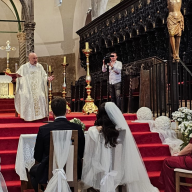
Here we see the importance of support in loving relationships. Every day we encounter obstacles, problems or difficulties. Quite simply, that is what life is made of. Support from loved ones is crucial. Without it we stumble more easily and more quickly. And when we are down, there is no one to help us get up. There is no one to offer us a hand and a shoulder to lean on. That hand and shoulder can be, and often are, words. Words of comfort, encouragement and hope. We might imagine that, when a bride and groom come to be married, they come as two threads representing their lives. Through courtship and engagement, these threads have already begun to intertwine a little. By marriage, finally bound together completely, they become stronger and more powerful in the struggles of life. But above all, the most important thing is to be joined, day by day, to the Lord and to His word.
Indeed, Arwen and Aragorn carried deep within themselves the desire for the victory of good over evil, and it was precisely that hope which guided them, without which these prophetic and profound words could surely never have been spoken, nor fulfilled. Aragorn's conduct changed after this encounter, precisely because of Arwen's words. He knows that at some point he will have to give his life for his people in order to defeat evil. The word has the power to change hearts and to touch our heart deeply.
Arwen reminds Aragorn of the moment of their first meeting, many years before. At that time they did not carry the burden of life's cares that they carry now. Yet, as the burden grew, so too did their longing and love for one another. Here too we see the importance of recalling the wonderful, bright moments of the past in a relationship. We know how the Lord himself always reminds us, in difficult moments, of the signs he has worked in our history. This gives us hope - precisely the kind of hope Arwen offered Aragorn.
The two of them passed through many hardships and extremely difficult moments, which often seemed unresolvable, but they truly fought like lions. They fought against visible adversaries such as Sauron. Against many who did not approve of their marriage. They also fought the battle of reconciling their personal desires with their duties and the common good.
But, it seems to me, the hardest battle was the one against the invisible enemy, who tempts us too every day. Does all of this make sense? So much struggle, for what? Why does the Lord give us all this? Does He love us, even though He allows us to suffer? But it is precisely in this that our love for the Lord, and for another person, is revealed. Genuine love is best tested by suffering. Without that, "I love you" means nothing. Without that, it is clear that "I love you" comes from lust, infatuation, or shallow feelings.
A true "I love you" becomes a battle cry, because real love is like a battle. A battle first of all with ourselves. We struggle with the pain of the wounds and scars of our own history, and with the devil, who tells us that those wounds have no meaning. With him who points a finger at those who love us most and tells us the opposite. That not even the Lord loves us, let alone anyone else. The Lord calls us to be like the grain that falls, dies and gives up its life. For it is there, in death, that we will find him. Dying, of course, does not necessarily mean physical death. For one can die, symbolically, in many ways. We die whenever the other person acts against us, whenever they are not what we would like them to be. We also die when we set ourselves aside, our own wishes and demands. We die symbolically when we sincerely forgive and forget. We find suffering also in humility. The falling of the grain into good ground can mean precisely this: giving oneself humbly to another.
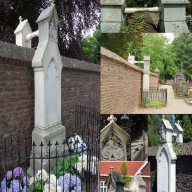
Tolkien himself understood this. In the love story of Aragorn and Arwen we see the imprint of the story of J.R.R. Tolkien and his wife Edith. John met his wife when he was 16 years old, and waited 5 years before they could marry. All his life he wrote her love poems and always spoke of her with warmth. He wove his love for her into the mythology of Middle-earth. First into the story of the love between Beren and Lúthien, and later, as we have already mentioned, into the much better-known story of Aragorn and Arwen. Even in death he did not leave his Edith. He is buried beside her, in the same grave on which the names Beren and Lúthien are carved. And as Tolkien himself would tell us:
The world, he reflects, truly is full of danger, and holds many dark places within it - and yet there is still so much that is good and fair; and even though love everywhere is now touched by sorrow, it seems, in the end, to grow only the stronger. J.R.R.Tolkien

- Mladen Klanac
- Hits: 50