Because of My Love for You, Who Led Me to the Love of Christ
A few days ago marked the 75th anniversary of the dropping of the atomic bombs on Hiroshima and Nagasaki. In this article we bring the marriage and family story of Paul Nagai Takashi and Midori Moriyama, of his conversion, and of their shared witness to family and marital devotion, Christian love and commitment to peace.
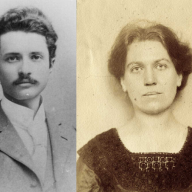
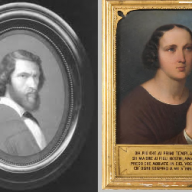
Nagai Takashi was born in 1908 in the town of Matsue, in Shimane Prefecture, in the province of Izumo, the very place where the myths of Japan have their roots. It is also home to one of the most important Shinto shrines, Izumo Taisha, and so Nagai was raised in Shinto, but as a young man became an atheist and a convinced materialist. At the age of twenty, Takashi came to Nagasaki to study medicine; he found a rented room in the house of the Moriyama family and there met Midori (1918-1945). As a Christian girl, she gradually led him towards the Catholic faith, telling him about Father Paul Miki and his companions and their martyrdom. When Takashi Nagai was baptised on 9 June 1934, he had to decide on his new Christian name. He chose to be called Paul. He had been captivated by the story of the life of Paul Miki, one of the first Japanese Jesuit martyrs, who refused to trample on images of Jesus and the Virgin Mary, even though doing so would have saved his life. Out of love for Christ he was crucified on a hill near Nagasaki, together with twenty-five other companions. That was in the year 1597. The first missionary to reappear in the country did not arrive until three centuries later, in 1865, and he could hardly believe his eyes: more than three thousand Christians had survived every persecution.
Midori's parents were direct descendants of Sonzaemon, one of the leaders of the hidden Christians (kakure Kirishitan) who, from the seventeenth century onward, kept the Catholic faith alive through seven generations, cut off from the rest of the world and from the universal Church, after all the missionaries had been killed or had fled the persecution. Midori's parents were what was called chōgata (keepers of the calendar), whose task was to remind the faithful of the dates of the feast days. The faithful would gather and pray in secret, in the forest. Since there were no longer any priests, the laity organised themselves so that some would baptise and others would teach the catechism.
When he moved into the Moriyama family's house, Takashi did not yet know this story. He studied hard, played basketball, wrote poetry, and believed he had done with religion for good. In March 1930 Nagai received a telegram from his father that read simply, "Come home." His mother was dying: "In her eyes I saw myself as one who denies the existence of the soul, but in that instant I instinctively felt that my mother's soul truly exists: it was parting from her body, but it would never cease to exist." After that he began to read Pascal's Pensées, which helped him enormously in his spiritual growth: "the heart has its reasons which reason does not know. Faith is a gift of God ... you must pray to receive it."
While serving on the Chinese front he received a gift from Midori of the Catechism of the Catholic Church, and through it came to know the Catholic faith better. He always carried a Bible with him. He was especially moved by the Letter to the Romans: "For thy sake we are being killed all the day long; we are regarded as sheep to be slaughtered." Rom 8:36
On Christmas Eve 1932 Midori invited him to Midnight Mass at the cathedral in Nagasaki, the largest church in East Asia, with its twin towers sixty-four metres high. Built with the donations of fishermen and farmers, it was a symbol of the rebirth of the Catholic community after many trials. Takashi was deeply moved by the hymns and prayers of the faithful in the cathedral. "I felt the presence of Someone I did not yet know," he would recall later. The following night Midori fell ill and very nearly died. Takashi immediately diagnosed the illness, acute appendicitis, carried her in his arms to the hospital while snow fell outside, and she was quickly operated on and recovered. He had saved her life.
In August 1934, shortly after his baptism, still deeply in love, they married, both of them twenty-six years old. She understood their life together as a "privilege they would have the chance to share on a common path, wherever it led, and as a gift for everything that would happen along that path".
She was the president of a women's society, and he too became involved in the Society of St Vincent and committed himself to caring for the poor. He came into contact with the Polish Franciscan Maximilian Kolbe, who had opened a friary in Nagasaki. He diagnosed Kolbe with tuberculosis and treated him until his return to Europe, neither of them yet aware of the sacrifice each would make, of the death and the path to sainthood that awaited them both.
When war broke out, he went to the hospital to help the wounded who were arriving from the whole region. Paul Takashi specialised in radiology, and his exposure to X-rays resulted in leukaemia, which was diagnosed in June 1945. The prognosis was grim, he had little time left to live.
- On 8 August he embraced his wife for the last time, before leaving for the night shift at the hospital to care for the sick. The next day, 9 August 1945, at 11:02 in the morning, an atomic bomb exploded at an altitude of 500 metres, directly above the cathedral, which would be utterly destroyed. Around 70,000 people died.
Severely injured, Paul Takashi found the strength to respond, helping as a doctor the victims of that hell on earth. Then came the hardest discovery of all. His beloved wife Midori was dead. Of her body, beneath the ruins of their house, he found only a few remains and her rosary. In his book Nagasaki no Kane (The Bells of Nagasaki), Nagai describes the scene after the bomb exploded in these words: "Hell, sheer hell. As in the world of the dead, there was no one left who could even hear a groan or a cry. There she was (Midori, dead), just as I had expected. A blackened shape amid the ashes! Oh, Midori! Nothing remained but a few bones on the spot where the kitchen had burned, a fragment of a rice bowl ... I came closer and touched those bones. They were still warm. I gathered them up. They were very light, and crumbled apart. Wrapped around them was nothing but her rosary."
He promised her that he would devote to others the little time he had left of his life on earth: "In memory of you, because of my love for you ... who led me to the love of Christ". He cried out: "Lord, you know how weak I am. I do not know whether I can accept all of this. My God, why so soon? My wife, my children! And all the work still left to finish! Ashes, nothing but ashes everywhere! A life reduced to ashes! I cannot bear such a worthless life. I must gain something immortal, hold fast to something that does not pass away. Even as time passes, as space vanishes and living things perish, I must live a life in which I can leave behind something immortal, something that does not pass away. Now I have understood that what transcends time and space is eternal, and that the words of Jesus Christ are eternal, the words of God."
According to figures gathered by Takashi himself, of the 10,000 Christians of Urakami, the Christian quarter of Nagasaki, as many as 8,000 died instantly. In his memoirs, published in 2007, Cardinal Giacomo Biffi suggested that the city of Nagasaki may not have been chosen at random for the second bombing, wondering aloud whether the fact that it was, besides having a storied history, the most thoroughly Catholic city in Japan, was entirely beside the point.
Takashi preferred instead to ask why he had survived while his wife had not, and found this answer: "They did not yet want the two of us together in Heaven: we failed the entrance examination." He believed that "Urakami had been chosen by God as a sacrificial lamb to bring the war to an end, a kind of deeper plan of divine providence", as he put it in his address, as representative of the Urakami parish, at the funeral of the victims: "All eight thousand of you, because you had confessed and received absolution for the feast of the Assumption of Our Lady (Fukure Manjû), have been lifted up on the clouds into heaven, before the feet of the Lord".
They had four children. The eldest daughter Maria Ikuko died after one year. The third child, Sasano, also died young. Their mother was buried between the two little girls. Two of his children, Makoto and Kayano, escaped the atomic bombing because they were staying with relatives in the countryside. His profound grief over the fact that they had lost their mother, and might soon lose their father too, became the driving force behind his prolific writing. "I must put off, as long as I possibly can, the moment my children become orphans, even if only by a day, or an hour. Even if it is only a minute, or a second, I want to make their time of loneliness as short as I can." He wanted to stay with his children for as long as possible: "I pretended to be asleep, and Kayano relaxed and pressed her cheek against mine. I felt my cheek slowly growing warm. Then, as though savouring some small treasure she did not want anyone else to know about, she whispered, "Papa." She was not really calling me. It was some barely audible thought that simply echoed up from the depths of her heart. The love I give my daughter Kayano as a father is unique, very particular, and exists only between Kayano and me. This singular and absolute love is not general or universal. You cannot exchange it for any other love. No one is permitted to act as father or mother before my children! When I am dead, the memory of their parents will remain in their hearts. Makoto and Kayano! Do not be cowards! Become strong, upright and joyful, as orphans should be!"
He spent his last few years in bed, praying, writing and receiving visitors, of whom there were a great many. But, one of the most unexpected visits was that of Helen Keller, the famous deaf-blind writer who had devoted her life to working for the poor and for world peace. Although the meeting lasted only some fifteen minutes, that visit, on 8 October 1948, moved him deeply: "She took hold of my hands! For a moment I felt a powerful sense of love, as though an electric current were passing through my whole body."
Emperor Hirohito and the envoy of Pope Pius XII, Cardinal Norman Thomas Gilroy, came to see him. Thanks to a donation, he planted a thousand cherry trees, turning that devastated land into a "hill in blossom".
"Consolation, courage. The Bells of Nagasaki." is a song with lyrics by Sōtō Hachirō and music by Koseki Yūji, performed by Fujiyama Aiichirō, which became a bestseller in Japan in 1949, not long after the Second World War. It was inspired by Takashi Nagai's book Nagasaki no kane (The Bells of Nagasaki), a first-hand testimony to the terrible tragedy caused by the atomic bomb, and at the same time an expression of the love and longing for peace, values that he lived and professed as a Christian. It was the first book written by a survivor of the atomic bomb.
LISTEN TO THE SONG
The English lyrics of "The Bells of Nagasaki" are not reproduced here, as the song remains in copyright; it mourns Midori beneath the cathedral bells and finds consolation in the rosary left among the ashes and in the image of Our Lady shining white through the night.
The melody and words of The Bells of Nagasaki are engraved on the wall of the slope leading up to the house of Nyoko-dō. On the slope beside the Statue of Peace, the symbol of Nagasaki, stands a small wooden house of just ten square metres. Nagai lived there, suffering from leukaemia, and there he wrote 17 books in four and a half years. Nagai named the house Nyoko-dō ("Love your neighbour as yourself"), inspired by Christian love.
His granddaughter Nagai Tokusaburō is still living today, and runs the Nagai Takashi Memorial Museum, which is visited by around 150,000 people every year.
Paul Takashi died on 1 May 1951, leaving behind a son, Makoto (16), and a daughter, Kayano (9), asking that his body be used for scientific research into the effects of radiation. Twenty thousand people attended his funeral. The whole city of Nagasaki honoured him with a minute of silence while every church bell rang. A couple of years earlier, before many who already regarded him as a saint, he had said: "I would like you to understand my desire for peace, for a lasting peace that flows from love of neighbour, and to put it into practice in your own lives. Never before have we been so determined not to provoke further wars. And that is entirely because of the explosion of those two atomic bombs. Now that we have renounced war through our Constitution, we must root war out completely from the depths of the human heart. The moon that lights up the night sky is nothing but a cold mass of matter reflecting the sun's light. Christ is the sun, and I reflect only a little of his light. Without God I would be nothing but a useless servant."
A film about him, All That Remains, has recently been released, and we bring you a short clip from it.
WATCH A SHORT CLIP FROM THE FILM "ALL THAT REMAINS"
He summed up his counsel to visitors in the words: "Inotte kudasai." (Pray, just pray).
- Mladen Klanac
- Hits: 19