Conflicts Don't Knock at the Door - They Barge In Uninvited!
"Marriage is like the tango - each person dances in their own way, and it all looks perfectly in step"
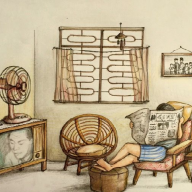
While we are forced to be by one another's side more than usual, conflicts don't knock at the door - they barge in uninvited. Perhaps now is the right time to "welcome" them, to sit them down at the table with us, and finally set some rules of conduct to protect ourselves from their destructive intrusion into our lives.
It seems that the words "responsibility" and "home" have lately become some of the most frequently spoken words in our society. State institutions call on us to be an example through responsible behaviour and to protect one another. This is a time of crisis in which our health is threatened by a new and unresearched virus, and where responsible behaviour is crucial to resolving the crisis. Scientists are working tirelessly to find a cure, and until then we must behave "as if we did not live in the 21st century". We are, in fact, using the same methods as in the medieval times of the great epidemics of plague and cholera - quarantine, hygiene and self-discipline.
Marital Crises and Tensions
Stay at home and don't go out except for essentials - that is one of the most important guidelines. And at home, what actually happens at home? Do we need guidelines for how to behave in our own homes? One of the jokes I received on my mobile phone over the last two weeks (thank God for this human capacity for communication, which strips panic of its authority and restores dignity to hardship) was a statistic from the daily police report, where against zero thefts and traffic offences stood a figure of 16,325 call-outs to homes over family quarrels. Being side by side with one another brings its own challenges. For many, returning within four walls can be the trigger for unresolved problems. Being shut in at home also brings nervousness, helplessness and a sense of powerlessness. We are told there is no cause for panic if we keep to the instructions and rules, and yet panic still finds its way into many homes. It is hard to cope with such emotions, and it is no wonder that we are quarrelling more than before precisely at this time. And perhaps, thanks to the "corona crisis", we will finally look "eye to eye" at some of our everyday problems, which until now we have successfully swept under the carpet.
The people who are most likely exempt from these daily, painful quarrels are certainly medical staff and other healthcare workers fighting on the front line, or those who have a family member affected by the virus. Such people need peace, comfort and the closeness of their loved ones, and many of them, for the first time, are raising their eyes to heaven and crying out for the strength and help of our Creator and Saviour.
Those of us who stay at home, obedient to the regulations, still face great challenges from unresolved quarrels and misunderstandings. Here I am thinking above all of married couples and their crises and tensions. Now, as we are forced to be side by side every day and the day lasts longer than usual, conflicts no longer knock at the door - they barge in uninvited. Perhaps now is truly the right time to "welcome" them, to sit them down at the table with us, and finally set some rules of conduct to protect ourselves from their destructive intrusion into our lives.
Signs that Point to a Quarrel with Destructive Consequences
There are two clear signs that a marital conflict is beginning, one that you will struggle to resolve simply by knowing good communication techniques. The first is a sudden, radical shift in the emotional tone of the conversation. Just a moment ago you were enjoying yourselves and laughing, when suddenly one of you changes their expression and tone, withdraws, or starts a quarrel out of a clear sky. "What's got into you all of a sudden... you were fine a moment ago." It is as if someone changed the rules of the game without warning you. I know many examples where a husband's comment on the female storm of hormones known as PMS sparks a quarrel, and it all ends in mutual accusations, and sometimes even in a complete breakdown of communication for a couple of days.
The second sign is that the perception of an insult grows beyond its actual proportions. Whatever was said triples in weight for the person who feels hurt. From an ordinary remark like "why was the bathroom light left on", a couple's quarrel ends up in accusations reaching back three generations and all their failings.
Lethal Behaviours That Destroy a Marriage, and the Conviction that Brings Hope that It Is Possible to Love Again and Be Loved
Some authors argue that this is about deep emotions that suddenly overwhelm us at a given moment, and that say something about our deep, unresolved wounds. Strong emotions such as shame, anger or fear mobilise the body. Almost every emotion has its own signature in the body. When we are afraid, blood rushes suddenly to our lower limbs (we say our legs give way beneath us); when we are angry, blood surges to our upper limbs (we clench our fists and feel a vein throbbing in our head).
Emotions are like a compass that orients and directs us towards whatever our brain assesses as danger, threat, risk, discomfort or humiliation. Mental health experts say we need to recognise them so that we can more easily spot our own flashpoints, so that they lose their strength and power, and so that we can decide to stop the lethal habits that destroy a marriage.
What Are These Lethal Habits, or Rather, Lethal Behaviours?
Constant mutual criticism and nagging, attacking and looking for someone to blame, emotional blackmail and threats, the "silent treatment". Behind every one of these behaviours lies a very strong need for power. Each partner's behaviour in a quarrel feeds the other's lethal behaviour." "If I feel rejected, it's impossible that you haven't done something to make me feel this way. If you truly loved me, you wouldn't do this, and you would surely change". The result of such thinking is that both of us end up unhappy. Not only do we no longer believe in love, we no longer believe that we can govern our own lives and our own emotions. We no longer believe it is possible to turn reaction into reflection.
A marriage can itself become healing the moment we realise that the choice we make is up to us. Whether we turn criticism into a clear statement of our wishes and expectations, resentment into a readiness to ask forgiveness, blaming into taking responsibility for our own behaviour, and emotional blackmail into planning together. We can restore our sense of security and connection if we choose, again and again, the marriage to which we committed ourselves before the Lord.
The Music for the Marital Tango Was Written by the Creator Himself
We always need to go a step further than seeking emotional satisfaction. Recognising so-called negative emotions and their destructive power in lethal behaviours is only the first step. The second step is slowly opening up to one another and showing a readiness to trust. Do not confuse love with the fulfilment of your own expectations. Because we are so focused on our unfulfilled expectations, we remain blind to the fact that there are different ways in which we can show love to one another. We show love through gestures and behaviours that are characteristic of our own character and upbringing. We are different. That is why marriage is often compared to the tango. There is a space between the dancing bodies, the music is the same, and yet each dances in their own way, and it all looks perfectly in step. Do not even try to teach the other your own steps. It is always better to ask the One who composed that music and that dance why it is so. That is why your solitude in prayer and your encounter with the Lord are the remedy for your soul, and then for your marriage too.
- Mladen Klanac
- Hits: 76