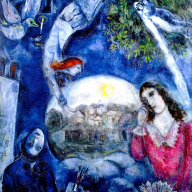
Thou Preparest a Table Before Me
"To invite someone to dine
is to take charge of his happiness for as long as he is
beneath your roof (at your table)"
Anthelme Brillat-Savarin
"Those who sit down at table are people who share the same life, or whom life closely binds together in some way. The table becomes a place for manifesting and sharing that communion. To invite someone to the table cannot, therefore, be reduced to 'giving them food'. To receive someone at table means giving them a place in one's life, sharing life with them, communicating in that which shapes life. To deny someone a place at the table means depriving them of communion."
"Eating reveals us as we truly are. It reveals us to ourselves as we truly are, and directs us towards others. The way we eat manifests our habits, our desires, the maturity of our relationships with others, our responsibility for them, our skill in recognising gifts, and a humility that is always grateful for all that we receive.".
Fra Ante Crnčević
The family table is, most precisely, the 'barometer of family life'. Besides being a place of shared eating, the table is above all a place of closeness. We do not sit at table with just anyone. At table we sit with someone, beside someone, facing someone, together with someone. What matters most is not what we eat, but with whom we eat it. When quarrelling, estrangement, distrust or infidelity occur, the shared table becomes a burden everyone wishes to avoid. Avoiding shared meals is the first sign of a crack in family bonds. Jesus "exposed" Judas's betrayal while they were sitting at table, at supper. A family that does not eat together, that does not gather around a common table, undermines its own foundations. It is only a matter of time before the collapse comes.
In the legend of the Knights of the Round Table, it is said: "They sat around the Table perfectly equal, and were served in the most perfect equality: no one among them could boast of being better placed than his equal: all sat in the seat of honour, no one was set apart." When a table is round, there is no need for two presiding figures, in a clearly visible position of privilege, while the rest sit more or less honourably to one side in relation to them. The table is, in the true sense of the word, a place of reunion and hospitality. It is said: "To sustain ourselves, we need to eat." But it is also a means of being before someone, calmly face to face over a meal, side by side with one another, by which friendship is prepared and maintained (Fabrice Hadjadj).
Fabrice Hadjadj continues: "At table one cannot take the other into consideration in a direct, face-to-face manner, not only because it would be rude or too forceful, but also because human encounter requires a certain making of oneself available, and therefore also a certain favourable setting, already a kind of human decision, one might say a sort of ritual, which arises from things bearing the mark of the skilful dexterity of our hands. One approaches one's neighbour; one does not pounce upon him from above. This approach takes place at a certain distance. And the family table prepares for that closeness, certainly, by means of the meal, but also by the passing round of dishes, which underlines that distance, that which brings respect and familiarity into balance, while at the same time excluding indifference and looseness. Without these solid dimensions of the family table, and the seated position determined by its height, the necessary distance between ourselves and the other would be dangerously exposed to impropriety and caprice; we might be too close, too far, liable to fall directly upon someone dear to us, or to turn away from someone we like, so that it is not excessive to see in the table a certain plank of social salvation.
The expression "to sit down at table" could mean "let us tell the truth" or "let us restore trust". The table unites the lowest and the highest activities of a living being: nourishment and intelligence, eating and speaking. It is the table that we prepare as beings of speech who are not angels, and as animals who are not beasts. Here mouths that speak alternate, in turn, with mouths that are full, mouths that chew do not fall upon the dish like a hunting dog. St Isidore of Seville, in his Etymologies, says: "Among us every meal is called a convivium, because it involves conversation about life." If eating is truly and properly a place for talking about life, it is not because life is discussed there more authoritatively than elsewhere, but because there conversation expresses life also in what is embryonic and rudimentary within it, that in which we share along with the amoeba or the begonia, for they too feed themselves.
It could even be argued that the family table is the first school of good manners. To be together there also means to behave well. That is why parents eating with their children is always accompanied by warnings that are countless and wearisome: "Sit up straight!"; "Don't wave your knife and fork about!"; and then, especially often: "What do you say?" – a question fundamental to the very essence of all speech, and which comes down to knowing how to say "please" and "thank you". In addition, in that same vein of listening to others, one may hear: "Don't interrupt your sister!" or "Wait until she has finished, then speak!". Such calls to good behaviour are heard less often when family members are scattered around the house. The occasion for them, then, is the family table. The poet Georges Haldas reflects on this as follows: "That code – I only understood this later; at the time I simply conformed to it out of habit – was not in the least intended to oppress us, nor for our parents to assert their superiority through it. Not at all. But simply to teach us not to live in disorder, in which nothing matters." For at table one takes a place, but one also gives place. One's own animality is accepted, being given a human character, in the realisation that making room for another does not mean denying oneself, but is, on the contrary, the very strength of the Creator…"
There is a moving story by Charles Perrault about Tom Thumb, about the return of the seven boys to the hearth where their parents had prepared a meal: "They sat down at table and ate with such gusto that it delighted their father and mother, to whom they recounted the fright they had suffered in the wood, speaking, as usual, all at once. The good couple rejoiced to see their children beside them again, and that joy lasted as long as the ten crowns did." The table is what orchestrates a gathering so that it may be framed, or rather suffused, with blessing and grace, with its place setting traditionally left for the stranger, the exile, the pilgrim who might knock at the door. The table is a place of transmission and of connection between generations, and so, therefore, something still deeper: a reminder of the gift of life and of life as a giving, not a function…, "amid the flood he has that ark at his disposal. Amid the shipwreck, that little raft remains to him." That is why, as Günther Anders says, "the television, the mobile phone, the tablet, the PC and the like are the negation of the family table: they do not secure the existence of a common centre, but replace it as a common point of escape."
Fabrice Hadjadj sums up his reflection on the table, saying that it is precisely the dining table that makes possible a threefold hospitality, or a threefold gathering:
First, there is the gathering of the guests, who take their seats at table in an order determined by old friendship, or else it is arranged as though this were a first meeting (and when old friendship is treated as though it were a first meeting, this makes known that friendship endures only if it is renewed). Furthermore, what is at stake is a real, not a virtual, presence. It is also a matter of the fact that at that table one communes more and communicates less; less information is exchanged, and more voices are interwoven. Jean-Pierre Corbeau, speaking of modern societies, has pointed to the fact that in advanced industrial society there has been a rapid transformation of those practices of commensality long regarded as a prime example of practices that are highly stable and resistant to change. The sense of belonging to a group, especially the family group, "is affirmed through certain rituals of eating that no longer necessarily imply gathering at the table". (Corbeau 1985, 111).
Here too, at table, is the gathering, or the collecting, of each guest within himself, by which each one unites his life's nourishing, sensory, intellectual and social activities, cutting off at the root idle chatter, in the twofold sense of that expression, restraining within himself his own lyrical flights – all this in the awareness, on the part of the human being, of his own modest condition as a creature that chews and swallows. Around the table there takes place that difficult holding-together, in truth, of one's own sluggish bowels with one's feverish thought. At table, the word is prophetically laid in the manger, between the ox that chews the cud and the donkey's dung.
Here, too, at table – usually a wooden table – is the gathering of the universe. Thus the best table is made of natural materials, with recognisable growth rings, that memory of vital strength or of life's breaking-through, with lines hand-carved or smoothed. And the older a table is, the more patina it has; the more traces it bears of having served, the better. Finally, on such a table earthenware dishes are best arranged, adorned with fruit, vegetables, grain, meat…"
The communion of the table also speaks of the sharing and the savouring of the word. The Greeks used the expression syn pínein, "to drink together", for it was not their custom to drink alone; rather, wine was drunk also in moments of communion, especially during or after a banquet, in gatherings where people who shared the same thoughts came together and could converse as equals. The banquet allows for a variety of nourishment: through food, drink, word, knowledge, wisdom, understanding, trust, humility in dialogue and learning… That is why we speak of the hygiene of the food we bring into the body, but also of the hygiene of word, of glance and of thought. And just as food can poison the body, so too words can be poisonous and deadly. That is why we describe words with terms proper to food, and we say that words are bitter, sweet, hard, fluid, palatable…
The psychologist L. Ballerini says that the best managers dine at home, with their families, and not in restaurants: "Perhaps today more than ever we need to put the table back at the centre of our evenings, even if it costs us a little effort to change our family's organisation of time somewhat. Dinner should be regarded as an appointment for the preparation of an important encounter, with all the care of which we are capable and with the greatest possible dedication". And in her book she speaks of an elderly lady who always carefully laid the table, at which she was almost always alone: "This woman always ate like a queen, even in her modest circumstances, like a queen whose king is temporarily away hunting, or long at war, but never absent from her thoughts. A woman I never once heard complain of loneliness, for although she lived and ate alone, she was never alone, since she never considered herself so". Her beloved was always with her.
It matters that we never think of ourselves as being "alone", but rather as always in need of the other, open to his coming, available for encounter. And the table becomes the best place to celebrate this encounter. And so we shall best find our own identity. We are made of relationships. Let us try, at least once a day, to eat in such a way that we truly join one another. So let us turn off the television and the mobile phone. Let us remove our connection to the world in order to be connected to ourselves – present here and now, available for genuine eating, conversation, listening to one another.
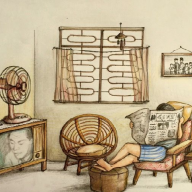
Corbeau speaks of the practice of "food nomadism", which can be viewed on two different levels. The first level concerns the growing habit of eating meals outside one's own home and family group, connected with changes in working hours and different ways of using free time; the second level, instead, concerns private space, in which the meal is no longer necessarily consumed in the dining room or kitchen, in the presence of all family members, but in front of the television, perhaps at different times according to the different needs of family members. This shift is an expression of growing individualisation which, in this sense, carries with it the risk of the deconstruction of the oldest social practices connected with eating together. In this light, it can become worthwhile to work towards succeeding in experiencing at least one meal a day together, as a family.
A banquet can also be a remedy for wounded communion. Eating together opens the way to communion even where, on account of hurt or wrong done, that communion seems impossible. When we do not yet have the strength to forgive, it will be born if we can find the strength to sit down at table and eat together. We do not eat in the same way when we are alone and when we are with others at table. Eating thus frees us from loneliness, from self-absorption, from selfishness, from a sense of isolation and of having been wronged; it makes us capable of serving and of being served, and that is the path towards reconciliation, towards overcoming wounds and pride. Eating makes us aware of the presence of others and makes us responsible for them. To eat together always opens the way to a new communion. Evagrius Ponticus says: "If your brother has something against you, invite him to a meal." Thus feeding ourselves, with all the wonder that sustains life, as well as with all the difficulties that sometimes threaten life, teaches us humility before the mystery of life, before the Life that lies at the foundation of every living thing. To feed oneself means not to forget life.
The Lord Jesus, as Benedict XVI says, is presented as the one who receives the supplicant beneath his tent, showing him generous hospitality and full attention. The divine host prepares food upon the "table" – this word, in Hebrew, originally denotes an animal skin spread upon the ground, on which the food to be shared is placed. It is a gesture of sharing not only food, but also life, in an offering of communion and friendship that creates bonds and expresses solidarity. Then there is a sign of great generosity: fragrant oil is poured upon the head, giving relief from the scorching desert sun, refreshing and soothing the skin, and gladdening the spirit with its fragrance. Finally, the overflowing cup adds to it all a festive note, with its fine wine, shared with overflowing generosity. Food, oil, wine: all these are gifts by which one lives and which give joy, for they go beyond what is strictly necessary and express the gratuitousness and abundance of love.
Jesus is the generous host who receives us and saves us from the hands of our enemies, preparing for us the table of his own body and blood, as well as the banquet of the final messianic feast in heaven: "The hunger that dwells within us is not only a hunger for food, but also for affection, for meaning, for fulfilment, for God, for desire is a 'door onto the infinite'. To be human means to be in search. To be hungry and thirsty. Desire detaches us from our habitual knowledge, from our fixed diagnoses and convictions, from the accumulated inheritance that weighs us down, from the tyranny of our absolutist points of view. It does not strengthen the closing-in of the self upon its own ego, but rather transcends and transforms it, setting us before the Other and his Otherness. The 'I' that desires makes room for the Other, or believes, places its faith in the Other, situates itself within his orbit, seeks his light. Desire is a compass: it orients us towards God" (J. Tolentino Mendonça).
It is precisely the preparation of food by cooking, the anthropologist Claude Lévi-Strauss holds, that makes a human being human, unlike all other creatures. To eat, you must cook. P. Gauguin said: "Cooking calls for an untroubled mind, a generous spirit and a broad heart". To cook, you must have a "light" head, be able to concentrate on the task, not "spoil the food", not "waste", not "throw away" a tasteless, or even bad or indigestible dish. A generous spirit is needed, that is, the capacity to make the little one has "abundant". You must not measure the preparation of food by your own hunger alone, but by the hunger of others. To cook means to think seriously about other people's hunger, to learn how to take the desires of others seriously. Finally, a great heart is needed, for one often cooks not for oneself, but most often for others. We think not of our own needs, but of the needs of others. And of what they love most, of what is the finest dish for them.
It is time to return to basics. Or, better said, it is time to recover and rediscover the taste of what is truly necessary, of essential things: "Those who eat and drink together are, by that very act, bound to one another by a tie of friendship and mutual obligation", concludes Robertson Smith.
- Mladen Klanac
- Hits: 60