Family, basketball, faith and friends - Krešimir Ćosić's four sacred things
I did not want to devote myself entirely to basketball and be nothing but a basketball player. It was clear to me that life has far wider, deeper and higher dimensions than the game, and that the charm of the game lies in genuine, not purchased, competition. So I decided early on that money, fame and vanity must mean nothing to me. I play, I live, and in that I shall succeed.
If you set off from the main entrance of Mirogoj along the first path by the northern arcades, at their far end – by the small entrance to the cemetery – you will find a small open chapel. Go in! There before you first stands the grave of Ivo Tijardović, and behind it the grave of Ante Mimara. In the corner you will at once notice Krešo’s fine bust on a small pedestal, where it is carved in gold letters: "To a wonderful man – a believer – a famous sportsman of the world – a Croatian patriot – a faithful husband – a tender father". And the signature: His wife Ljerka and children – Ana, Iva, Krešimir Petar.
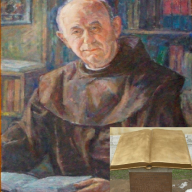
Our Krešo, ever since I have known him, was a man of deep faith, though he did not talk about it – he lived his faith instead. He belonged to The Church of Jesus Christ of Latter-day Saints, but he was not a believer merely by that affiliation. He truly believed in a personal God, and personally strove to put that faith into practice in his life. Thank You, God, for creating Krešo and granting him so good a nature, and for the way he perfected Your wonderful gifts through his own diligence. He believed in You; You were the fundamental inspiration of his life. And he knew that death does not have the last word, because You are LIFE. In You, for him and for us. May he rest in You with all the saints, until we too are gathered together with him in You, life of all lives (Fra Bonaventura Duda).
He was born on 26 November 1948 in Zagreb. According to the custom of the time, his grandmother first made sure her grandson was properly baptised. He was given the name Krešimir after St Krševan, the patron saint of Zadar, whose feast day falls on 24 November, two days before his birthday. His parents’ wish that he be called Branimir was not fulfilled: "Perhaps I did not manage to hit St Krševan’s day exactly, but my sister Gordana more than made up for it by being born exactly on 24 November 1951."
They returned to Zadar in 1952, when he was four years old: "My earliest memories are of events and people connected with the Adriatic and with Zadar. I spent my childhood in a devastated, almost ruined city, not exactly exciting, but not too dull either. I spent my summers in Dobropoljana with relatives. There I learned everything about the sea, and there was a different group of friends there too, different friendships and a different way of life. Besides learning to play cards by watching our elders, we were kept busy picking figs, grapes and olives. One of those summers I had an unusually vivid dream. I dreamed of a place I had never seen before, full of bare mountains and desert plains. I had never travelled beyond Zadar and the islands, so this was a landscape unlike anything I had seen before. It was as if my imagination had created some other, different world. I have never managed to erase that place from my mind." "
After finishing secondary school he enrolled in the only faculty that existed in Zadar, the history of art: "I frittered myself away in mere passing time, letting time carry me along, and in truth living in an unsporting way. I indulged the whims of the moment and bad habits, idling about in cafés and bars amid thick cigarette smoke. I realised that what I was doing was not good and that it would lead me nowhere. I was sinking ever deeper into my own reckless world, which was heading for ruin. You travel, you eat, you drink, you play, you sleep, and you go everywhere. It is a rhythm with no way out. You grow numb to everything. The best remedy is sleep, and the more you sleep, the more you want to sleep. We lived a truly nomadic life, like railway men and globetrotters…, without any real family life or a home of our own, so it was only natural that we often went through crises."
At the invitation of Brigham Young University he went to America and spent four years there studying. He says that there he had everything that makes a person happy and content: "It was the second time I had travelled to America, this time alone. I was 20 years old at the time. Without any fear I set off on the long journey. I arrived in Provo, which lies at an altitude of 1,800 metres. I got out of the car and looked around me. Something felt familiar. I had the feeling I had already been there. The rocky mountains seemed astonishing to me. At one point I remembered that all of this matched the outlines from a dream I had had as a boy in Dobropoljana. It was clear that I had not travelled so far in vain. I breathed in the air with my full lungs and revelled in the purity of the scent. I felt as though I were being renewed from within."
There he met Mormons, the Latter-day Saints, for the first time: "Before I arrived, I barely knew anything about Mormons. To me they were one of the many Protestant religions that others regarded as a sect, but which many respected for its seriousness and steadfastness. It was hard for me to grasp their views, especially since I came from a family in which religious life was not practised. My father and mother were not believers, though my grandparents, while I was a child, would take me to Christmas and Easter services, purely to keep up the custom. I found myself at the very centre of the Mormon Church, in daily contact with believers who proved to be honest people. They did not impose their views on me; all that mattered to them was that I play. And in any case, I do not know how they could have explained anything to me, since I did not understand them at all."
Travel broadened his horizons and made him aware of shortcomings, both in knowledge and in behaviour: "Self-awareness, boldness, enterprise, and the confines of Zadar within which I had moved became too narrow for me. I felt a discord between my outer and inner life. I wanted to absorb the whole world, yet I could not experience it, because I lacked the knowledge, the harmony and the sense of measure. I travelled across continents playing, succeeded in basketball, was becoming a star, and could spend, go out and enjoy myself as I wished. Naturally, my appearance, too, spoke of my way of life. I grew a moustache, a beard and long hair to look like the hippies. Everything in the spirit of the times! But on the court I did not behave like a hippy. There I was diligent, dedicated and reliable. I always tried to give everything I had, and I never crossed the line where the interests of my club or the national team were concerned."
He lived among great sportsmen who were, in fact, very small men, and among unremarkable sportsmen who were, in fact, very great men: "I had no role models. For some reason, they did not exist for me – they were distant, unreal. I had come into a sport that did not even have them at that time. There was no player I wanted to turn myself into. I had to create for myself a fictional hero with all the attributes I myself wanted to possess one day – a combination of a guard, a tall forward and the then-nonexistent roaming centre. That is why, at first, I was not even understood. I had come into a world different from the normal one, a world of double standards, where those who say one thing and do another get on best, and where you are judged by your body. It is not that I had a wonderful body, but once they saw my height and my thinness, they overlooked all my other attributes, such as intelligence and technique. So I came into conflict right away. I did not want to be what others decided I ought to be. I did not want to submit to something that would have led to ruin. My temperament and spirit were the opposite of my body. I decided: if I cannot find a player after whom I might model myself, I will create one within myself.
At the same time, I maintained that sportsmen are people who have their faults and their virtues. These somehow stand out more during gruelling matches and tours, and so spoil the harmony and the image of my friends, my teammates, and perhaps even of myself. My philosophy of the game was somewhat different from the American one. I was raised in a spirit of togetherness. At home, in Zadar, no one ever asked me whether I would score ten, twenty or thirty points. Only occasionally would some scorer want to stand out. I never wanted to stand out at the expense of the overall result. I considered it most important that the team win. Perhaps I arrived too quickly at everything I wanted to achieve. I also came to know the American side of fame. Everything there is more pompous, more glamorous and more spectacular than at home, but essentially it is the same. I became indifferent to certain hallmarks of modern life: expensive cars and luxury houses. I saw so much of everything around me that it simply stopped making any lasting impression on me. Perhaps my surroundings accepted me too quickly, not as a foreigner but as a member of the University. In a way, it suited me to be different from the others in a society where everyone shared the same faith and the same schooling. As a foreigner, you come across as more charming, and you can allow yourself things others may not. I did not need to prove myself, nor did I need to do anything special. I only needed to live. As I wished to live, I became more and more aware of the difference between the worldly and the spiritual, which were interwoven within me."
Arriving in Provo was a turning point in his life: "The biggest problem, when you first encounter faith, is that you remain caught between two stools with religion. Once you gain the realisation that God exists, you come to the question of what you yourself must do, and what God will do. Throughout Utah, and of course in Provo too, Mormons are in the majority and strongly influence others, above all by example. The calm that radiated from their faces, and the conscious discipline I encountered at every step, stirred up in me – until then inclined to stubbornness and a somewhat anarchic spirit of adventure, even to defiant obstinacy and vehemence – a whole series of questions. I began to question the value of basketball records and the idolatry of profit as the sole measure of worth. When, because of deep inner needs, I began to wish to join the Mormons, this caused a great deal of astonishment and disbelief. Until I had settled certain questions with myself, I did not want to declare myself. But when, guided by some inner voice, I set off to put on the new white robe at the baptismal rite of admission, I was certain that in doing so I could only gain. And gain a great deal."
Basketball led him to think further, about life itself and the meaning of everything: I soon realised that the world of basketball, or of sport in general, differs from the "normal" world. Our understanding of the world is somewhat different from that of ordinary students, workers, office employees and the like. We live in constant motion, we move about, something is always happening, and there is always something to live for. Some goal that is always within reach, some championship a year or two away, Saturday’s match, the weekly match, any match at all. It is the only thing that keeps turning over in your head, and once it is over, you only think about the next one. At times this is so terribly hard that it is not even clear, at times, how you endure it. So I constantly tried to be myself, to seek my own path, and to listen to the advice of wiser people. I learned to choose. Choosing well has brought me to the most precious things in life. Good choices. I became myself, and for that I am grateful to all those who helped me along my life’s path."
He also thought about those who came to watch him: "There is a great difference between the audience at the start of my career and later, in the years when I was finishing playing. In the old days, the audience was, in effect, an extended family. With such an audience, players form an immediate and spontaneous bond. They know you, they forgive you, they attack you, they defend you. They reserve for themselves the right that only they may punish and praise you, but in return they unconditionally defend you against attacks and criticism "from outside". The Zadar audience is unique and truly unrepeatable. Nowhere have I ever encountered such singular support as in Zadar, and I have never heard of anyone who managed to cheer for any club other than Zadar. Supporters arrive at the hall two or three hours before the match begins, and not in order to watch their club lose. The imperative of victory is invariably present, but for that very reason they themselves will do everything to contribute to it. They welcome every new player kindly. They wait for him. A few attempts – and everything is known. Either you have earned their trust, or you have not. They understand basketball. They know when to fall silent, when to jump on the referee, when to stay calm, when to applaud. That sixth player of ours also has one irreplaceable function – he is the club’s constant, positive opposition: he reserves for himself the unconditional right to criticise."
Under the headline "We invented basketball", the sports journalist Mladen Ivanišević wrote in Sportske novosti: " Zadar’s basketball players do not succeed only because they are exceptionally talented, because from their very beginnings they have cultivated a more attractive style of basketball than other clubs, or because they now have, in their midst, such extraordinary individuals who fill stadiums the world over, but also because they are not alone, nor left to their own devices – because their city is constantly there beside them."
He always gladly returned to his roots, to his family, his friends, his city, his homeland: "But if you want to get to know and love your homeland, go abroad. I came back. I must always be certain that Zadar is there, beside me, that it is my city, the dearest corner of my beloved country. I could not explain the reasons that drove me to return. I could not define it one-dimensionally, as though it were a decision useful for my career, or as though personal reasons were driving me home. There are always certain primal, deep emotions that surface. I decided to return home because of some instinctive call of the land where I began. I matured as a basketball player, grew serious as a man, and yet, somehow, in all of this, I stand alone, without support. The only place I could find that support was in Croatia. Besides Zadar, I was most attached to Zagreb, through my wider family and through my way of life. Zagreb was the city where I could and wanted to live; it gave me the chance to finish the studies I had begun, and its great cultural and sporting tradition was decisive in my choosing it as my city, where, at thirty, I would settle, make my home, start a family, and live a peaceful and fruitful life."
With his return to Zagreb, the place of his birth, a new period began in his life: "In Zagreb I made many new friends, but one friendship was different, special. Through friends I came to know Bonaventura Duda, one of the holiest people I know. He used to preach at the Church of St Francis on Kaptol. We shared a common love of theology, and since we had both taken part in translating religious texts into Croatian, we always had something to talk about. I would often spend hours talking with him about God. Although our church outlooks were different, we thought alike about God and faith. He understood the human connection with God. He understood that infinite love which God offers you. I would even attend his Masses, because I would always learn something new at them. He spoke in a relaxed, composed way, and, one might say, humanly. With him I always had relaxed conversations. I think I learned a great deal from him, and grew as a believer thanks to the spirituality he managed to pass on to me."
"One relaxed day, my former teammate from the junior national team, Ivan Valek, now president of the Mormon community in Croatia, invited me to lunch. He said he was taking me to the best restaurant in the city. He picked up the phone and called Ljerka Kobasić, saying he was on his way with a friend. The surname sounded familiar to me. We drove towards Maksimir and turned into Bukovačka Street. The street seemed as if it had no end; I had the feeling I was driving from Provo to Las Vegas. At last we reached a family house that did not resemble a restaurant in the slightest. Ljerka welcomed us with a table laden with food. Ljerka and Ivan had known each other since childhood, because they had gone to catechism together. In the relaxed atmosphere I learned that she had recently lost her father Franjo, that she was a professor of French, that she worked at Generalturist, and that, as a true Catholic believer, she had all the sound values I myself had striven for. She made lunch so well that she could well have got married on the strength of it alone. We married at the Old Town Hall and held the celebration at the Hotel Esplanada on 24 July 1982. Since I am opposed to alcohol, I decided I would not have it served even at my own wedding. Ljerka was a Catholic and I a Mormon, so it would not have been right for us to marry in either of our churches. Ljerka and I slipped away around midnight and went to our shared home. The next day I heard that all my guests had been waiting for me to leave, so that they could celebrate properly. It took me a long time to marry; I was broken in many ways. I had to accept what God had prepared for me. For some reason, we expect God to give us something dazzling that will catch our attention, but instead He gives us the real things hidden somewhere in the ground. We must make the effort to find them. Only then will we value them more and take care of them. The real things do not come by themselves."
Ljerka says: "What many people do not know is that we did not marry in a church. We used to talk about it, but Krešo never directly asked me to convert and devote myself to his faith. There was one conversation, perhaps our last, when he knew he was losing the most important match of all. Krešo was aware of everything, the conversation about religion, his and mine, but it always ended just there, in conversation."
Krešo soon became a father for the first time. His first daughter, Ana, was born; she would later put together his autobiography, entitled Play, Believe, Live: "He didn’t get a son, but even so, I grew very close to his heart. He is said to have changed completely from that point on. For the first time in his life, basketball was no longer the centre of his focus; he turned towards the family, and his priorities began to fall into place in a different way. He spent every free moment with me, or so I am told, though he did not interfere too much in Mum’s work. From what I have heard, he was more of an observer and a supplier of nappies, toys and other necessities."
"I think everyone begins their great journey alone. A young person first builds his desire in silence and solitude, and it must become so strong that, depending on his talent and abilities, he can hold his ground and keep his direction of development despite all criticism, good, bad, and even malicious. Only in this way can one become a player. From my earliest youth I loved the truth. For me it was actually very hard. I did not have the advantages that most of my school friends had. I truly started from zero. And that was because I was very thin, with a pigeon chest, utterly ghost-like, and could hardly hold a spoon in my hand. All I had on my legs were knees; everything else was skin and bone. While others enjoyed themselves and rejoiced, I felt fine too, but I was never satisfied. Every mediocrity irritated me greatly. Being content with something very fleeting felt good to me only once I had accepted that it was fleeting. I was so weak while everyone around me was so strong. I trained day and night, and one of the reasons for that approach was the fact that I did not like going swimming, so nothing else was left for me to do. I thought a great deal about basketball, both before and afterwards. For me, basketball was not a source of income, earnings or fame, but a spur to thought. By thinking about basketball I learned about faith and about life, and connected the two; for me it was all one whole. I was interested in perfection. The longing for perfection has haunted me since I was small. I wanted the ball to become one with my hand. While others were content with every achievement, I could not come to terms with that. I was never satisfied; there was no match in which I did not find something that could have been better. That is why, later on, it was not hard for me to adapt and find my own solutions. "
He always wanted to play free of coercion: "When everything was fine, there was never the slightest problem with me. The moment someone began to force me, I would leave. In Zadar I cannot bear anyone binding me in chains. I stand entirely alone, for as long as it takes. If someone tries to bind me, I show him I am stronger, break the chains and go. In your own house you do not wish to be a slave. I love playing for Zadar’s sake, not for the sake of some individual’s personal interest, seeking to gain something from it in the short term while, in the long run, it can only harm Zadar. I did not let myself be tied down to mediocrity. I never allowed anyone to mock me, so I quickly adapted to new situations and anticipated those that might arise. I had to know everything in advance. I have always been a Zadar man, coming from those ordinary people among whom I always loved to live. Even so, I set myself a boundary: I never allowed myself to be drawn into petty, provincial mediocrity, nor did I let anyone play games with me. I do not think I am above Zadar, or better than others. I simply think that my playing, and what I have earned by it, give me the right to the same personal freedom that every citizen has. That I have the possibility of choosing where I will live, and of judging for myself whether I am of use or of harm wherever I happen to be. It took a great deal of effort and work before I won the right to be a free man, because at a certain point you become everyone’s property or, better said, the club’s property, without freedom of your own. Thanks to my going to America, I managed to rise above that; I reached a higher sporting level while, at the same time, remaining myself. That was my dearest victory. And through it all, I never forgot who I am and where I come from, neither abroad nor at home. Other players perhaps moved from their small clubs to big ones in order to stand out more. For me, Zadar was everything. There was no need for me to go to another club in order to become something I already was anyway. I had no need for some machinery to push me, to have every newspaper behind me. I still think, and I never regret it, that my greatest pleasure was playing in Zadar. Basketball is the only team sport that can be learned by playing it alone, and that is most probably where the secret of our basketball’s success lies. I have a very good memory. What I consider unimportant, I quickly forget – for instance, that someone owes me money – but I remember the essential things. In any case, I had to fight alone my whole life; I always had to solve something somewhere and fend for myself. I lived alone and solved my own problems alone. I received advice from everyone. I quickly adopted wise advice, and when I was not sure whether some piece of it was wise or not, I would wait. Sometimes it took me time to understand what was good. If I could choose my path again, I would, of course, choose basketball again, but I would devote much more time to school, that is, I would be more systematic. There is nothing worse than travelling the world and, out of it all, managing to understand little or nothing."
Krešo was witty and charming; he captivated people with his smile, and he was adorned by exceptional honesty, goodness and a readiness to help others. When he fell ill, he believed he would beat the illness; he never doubted for a moment that he would be cured. After the bone-marrow transplant his condition, unfortunately, worsened, and he was aware that the end was drawing near. I would spend whole nights beside him in the hospital in Baltimore, and he thanked me a hundred times over for that care... - says Ljerka, Krešo’s wife, who keeps her husband’s medals, trophies, balls, photographs and posters.V
- Mladen Klanac
- Hits: 37